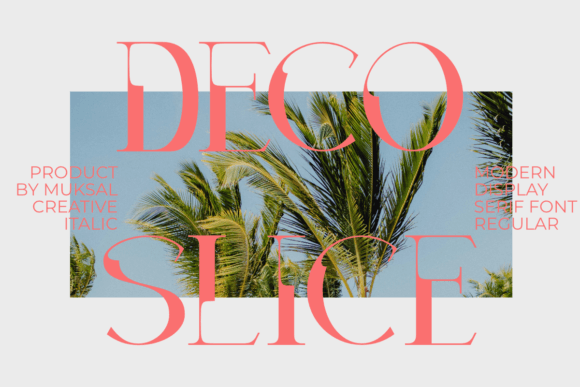
Decoslice: Evaluating a Geometric Art Deco Typeface for Modern Design
In the vast landscape of digital typography, finding a typeface that successfully bridges historical aesthetics with contemporary design sensibilities can be challenging. Decoslice emerges as a notable contender in this space, offering a distinct visual identity that merges the opulence of the 1920s with the precision of modern geometric design. For designers, brand strategists, and creative directors evaluating font options, understanding the specific characteristics, applications, and limitations of Decoslice is essential for making an informed decision.
Understanding the Aesthetic Profile of Decoslice
At its core, Decoslice is a modern typeface that blends Art Deco aesthetics with sharp geometric cuts. Unlike traditional serif fonts that rely on organic curves or standard sans-serifs that prioritize neutrality, Decoslice introduces a structural complexity through its distinctive sliced details. These "cuts" are not merely decorative; they define the letterforms, creating negative space that adds depth and visual interest without compromising legibility.
The font exudes a strong and dynamic character, achieved through an elegant fusion of retro and futuristic elements. The retro influence is drawn from the bold, linear geometry typical of the Art Deco movement, while the futuristic aspect comes from the clean, almost surgical precision of the slices. This duality makes it a versatile tool for projects that require a bold and avant-garde touch. When evaluating Decoslice, it is important to recognize that it is not a subtle background element; it is designed to be a focal point.
Strategic Applications and Ideal Use Cases
Choosing the right typeface depends heavily on the context of the project. Decoslice is particularly well-suited for designs that demand immediate visual impact. Its unique letterforms make it an excellent choice for branding initiatives where differentiation is key. For companies in fashion, luxury goods, nightlife, or creative agencies, Decoslice can convey a sense of sophistication mixed with edginess.
- Poster Design: The high contrast and geometric structure allow Decoslice to stand out at large sizes, making it ideal for event posters, concert flyers, and promotional materials.
- Logo Creation: For brands seeking a memorable mark, the distinctive sliced details provide a built-in graphic element that can simplify logo design.
- Packaging: On product packaging, especially for premium or limited-edition items, Decoslice adds a layer of perceived value and artistic merit.
- Editorial Headers: In magazines or digital publications, using Decoslice for headlines can establish a strong thematic tone before the reader engages with the body text.
The font’s ability to stand out with a striking style means it performs best when given space to breathe. Crowding Decoslice with other complex graphical elements can dilute its effectiveness. Instead, it thrives in minimalist layouts where its geometric precision can be fully appreciated.
Evaluating Benefits and Tradeoffs
Like any design tool, Decoslice comes with specific benefits and tradeoffs that must be weighed against project requirements. One of the primary benefits is its uniqueness. In a market saturated with generic sans-serif fonts, Decoslice offers a recognizable signature that can help a brand avoid visual homogeneity. Furthermore, its geometric foundation ensures that it remains structured and orderly, preventing the "retro" aspect from feeling dated or messy.
However, there are considerations regarding readability and versatility. The distinctive sliced details, while aesthetically pleasing, can reduce legibility at smaller sizes. Therefore, Decoslice is generally not recommended for long-form body text, such as paragraphs in books, detailed reports, or dense website content. In these scenarios, the eye may struggle to track the letters smoothly due to the interrupted strokes.
Another tradeoff is its stylistic specificity. Because Decoslice has such a strong personality, it may clash with brands that aim for a warm, approachable, or traditional image. It is a bold statement font, and using it requires confidence in the overall design direction. If a project requires a neutral canvas to let photography or illustrations shine, a more subdued typeface might be a better alternative.
Comparative Considerations and Alternatives
When selecting a typeface, it is helpful to compare Decoslice against other options in the geometric and display categories. If the goal is pure Art Deco nostalgia without the modern twist, traditional fonts like Broadway or Peignot might be considered. However, these often lack the crisp, contemporary edge that Decoslice provides. Conversely, if the priority is maximum legibility and corporate neutrality, standard geometric sans-serifs like Futura or Montserrat are safer choices, though they lack the distinctive character of Decoslice.
Designers should also consider the technical implementation. Ensure that the font license covers the intended use, whether for web embedding, print distribution, or app integration. Additionally, test the font across different mediums. While it may look stunning on a high-resolution monitor, verify how the sliced details render in print, especially on textured papers or at smaller scales.
Decision-Making Insights for Designers
To determine whether Decoslice aligns with your goals, ask the following questions:
- Is the text meant to be read quickly or experienced visually? If the latter, Decoslice is a strong fit.
- Does the brand identity lean towards modern, bold, and sophisticated? Decoslice supports this narrative effectively.
- Will the font be used primarily for headlines and short phrases? This is the optimal usage scenario for maintaining clarity and impact.
- Is there budget and flexibility for custom design adjustments? Sometimes, slight kerning or spacing adjustments are needed to optimize the sliced details for specific words.
Ultimately, Decoslice is a specialized tool rather than a universal solution. It excels in environments where style and personality are paramount. For projects that seek to stand out with a striking style, it offers a compelling blend of history and innovation. By understanding its strengths in display contexts and its limitations in body text, designers can leverage Decoslice to create memorable and effective visual communications.
In conclusion, Decoslice represents a thoughtful evolution of Art Deco typography for the digital age. Its sharp geometric cuts and elegant fusion of eras make it a powerful asset for specific creative projects. By carefully evaluating the context, audience, and medium, designers can decide if this avant-garde typeface is the right choice to elevate their work.