Crafty Cheese: A Practical Evaluation of a Whimsical Display Font
In the realm of digital typography, display fonts serve as the visual anchors for headlines, logos, and short bursts of text that require immediate attention. Among these, Crafty Cheese has emerged as a notable option for designers seeking to inject personality into their work. Unlike standard serif or sans-serif typefaces designed for long-form readability, Crafty Cheese is a display font brimming with charm and whimsy. Its playful curves and friendly demeanor evoke a sense of camaraderie and joy, making it a frequent contender in design projects targeting younger audiences or lighthearted themes. However, before integrating this typeface into a brand identity or publication, it is essential to evaluate its distinct characteristics, compare it against similar stylistic categories, and understand the specific scenarios where it excels or falls short.
Defining the Character of Crafty Cheese
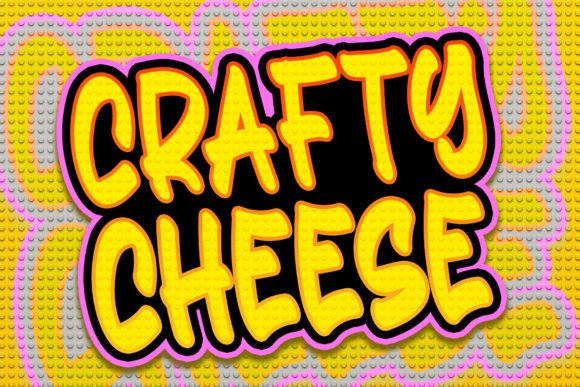
To understand where Crafty Cheese fits within a design toolkit, one must first analyze its structural DNA. The font is characterized by exaggerated, rounded terminals and irregular baselines that mimic hand-lettering. This aesthetic choice moves away from the rigid geometry of modernist fonts, opting instead for an organic, almost tactile appearance. The "cheese" in the name likely alludes to the font's approachable, snackable nature—it is meant to be consumed quickly and enjoyed without effort.
The distinctiveness of Crafty Cheese lies in its ability to balance legibility with high-stylization. Many display fonts sacrifice readability for the sake of being unique, resulting in shapes that are difficult to parse at smaller sizes. Crafty Cheese manages to maintain a relatively open counter space (the enclosed areas within letters like 'a' or 'e'), which aids in recognition even when the letterforms are heavily curved. This makes it particularly effective for children's books, party invitations, or any design project that seeks to radiate warmth and cheerfulness. The font does not shout; rather, it invites the viewer in with a smile.
Comparative Analysis: Crafty Cheese vs. Standard Display Fonts
When evaluating Crafty Cheese, it is helpful to place it alongside other popular display categories to highlight its tradeoffs. In the broader market, display fonts generally fall into three buckets: geometric, script/handwritten, and decorative/whimsical. Crafty Cheese sits firmly in the decorative/whimsical category, but it shares DNA with handwritten styles.
- Geometric Display Fonts: These rely on perfect circles and straight lines. They convey modernity, precision, and stability. While excellent for tech startups or luxury brands, they often lack the emotional warmth that Crafty Cheese provides. If a project requires a sense of human connection, geometric options may feel too sterile.
- Script and Handwritten Fonts: These mimic cursive writing. They can range from elegant calligraphy to messy scrawls. While they offer a personal touch, they can sometimes suffer from inconsistent spacing and poor readability at a glance. Crafty Cheese offers a middle ground: it retains the hand-drawn feel but uses a more uniform structure, ensuring that the message is clear even to young readers.
- Heavy Decorative Fonts: Some display fonts incorporate textures, 3D effects, or complex outlines. These can be visually overwhelming. Crafty Cheese remains relatively clean, focusing on shape rather than texture, which allows it to pair more easily with other design elements without competing for attention.
For designers comparing options, the decision often comes down to the desired emotional response. If the goal is authority or sleekness, Crafty Cheese is likely the wrong tool. However, if the objective is to establish an immediate rapport with the audience, its friendly demeanor outperforms more rigid alternatives.
Strengths and Best-Fit Scenarios
The primary strength of Crafty Cheese is its versatility within the realm of "friendly" design. It is not limited to just one application but shines in contexts where approachability is paramount. Below are the most effective use cases where this font delivers maximum value.
Children’s Publishing and Education
In children's books and educational materials, typography plays a crucial role in engagement. Young readers often struggle with dense text, so a font that feels inviting can reduce cognitive load. Crafty Cheese's rounded forms are less intimidating than sharp serifs. When used for chapter headings or activity titles, it creates a welcoming atmosphere. Furthermore, its clarity ensures that emerging readers can distinguish between similar characters, such as 'b' and 'd', better than in highly stylized script fonts.
Event Invitations and Social Media Graphics
For birthday parties, baby showers, or community events, the tone of the invitation sets expectations for the gathering. Crafty Cheese instantly communicates fun and celebration. On social media platforms where visual hierarchy is key, using this font for overlay text on images can increase click-through rates by catching the eye with its unique curves. It stands out against the sea of corporate sans-serifs that dominate news feeds.
Branding for Lifestyle and Hobby Brands
Brands in the food, toy, or hobby sectors often benefit from a personality-driven typeface. A bakery, a craft supply store, or a pet care service might find that Crafty Cheese aligns well with their values of creativity and care. It suggests that the brand is human-centric and accessible, rather than distant or purely transactional.
Limitations and Decision Factors
Despite its charm, Crafty Cheese is not a universal solution. Understanding its limitations is critical for making an informed design decision. The most significant constraint is its suitability for body copy. Due to its irregular spacing and decorative nature, it should rarely be used for paragraphs longer than a sentence or two. Extended reading in this typeface can cause eye strain and fatigue.
Another consideration is the context of the message. While the font radiates warmth, it may undermine messages that require seriousness, urgency, or professionalism. Using Crafty Cheese for a legal notice, a financial report, or a medical warning would be inappropriate and potentially confusing. The whimsical nature of the font could inadvertently trivialize important information.
Designers must also consider color and contrast. Because the font relies on thick strokes and curves, it can lose definition when placed on busy backgrounds or low-contrast color combinations. Unlike high-contrast serif fonts that cut through noise, Crafty Cheese requires a clean canvas to maintain its legibility. Additionally, while it works well in large sizes, scaling it down for small print applications like business card contact details may result in a loss of detail.
Evaluating Alternatives and Complementary Pairings
When Crafty Cheese does not fit the brief, what are the viable alternatives? Designers should look for other rounded sans-serif display fonts or custom hand-lettered assets that offer a different degree of formality. If the project needs a bit more maturity but still wants to avoid coldness, a rounded sans-serif with tighter kerning might be a better fit. Conversely, if the project demands more chaos and energy, a marker-style brush font could be more appropriate.
However, Crafty Cheese often performs best when paired with a neutral counterpart. A common strategy is to use Crafty Cheese exclusively for headlines and pull quotes, while pairing it with a simple, clean sans-serif or slab serif for body text. This combination leverages the strengths of both: the display font captures attention and sets the mood, while the secondary font ensures the content remains readable. This approach allows the designer to maintain the whimsical vibe without compromising the user experience.
Making the Final Decision
Choosing the right typeface is rarely about finding the "best" font in isolation; it is about finding the right fit for a specific communication goal. Crafty Cheese is a powerful asset for those aiming to create designs that feel warm, inclusive, and joyful. It excels in environments where the audience expects playfulness and where the message benefits from a human touch.
Before committing to Crafty Cheese, designers should ask themselves three questions: Does this project require a sense of fun and approachability? Will the text be short and impactful, or will it need to sustain long reading sessions? Is the context appropriate for a whimsical tone? If the answers lean towards yes for the first and third, and no for the second, then Crafty Cheese is likely the ideal choice. If the project demands neutrality, high density of information, or a formal tone, exploring other categories will yield better results. By weighing these factors, creators can ensure their typographic choices enhance their message rather than distract from it.