Brown Beige Font: A Practical Guide for Modern Display Typography
In the crowded landscape of digital typography, finding a typeface that balances personality with readability is a common challenge for designers. Brown Beige has emerged as a notable option in this space, positioning itself as a modern and cute display font. For creative professionals working on posters, logos, magazines, book covers, and banners, understanding the specific characteristics and ideal applications of this typeface is essential before integrating it into a project workflow.
This article provides an objective evaluation of Brown Beige, exploring its design attributes, suitable use cases, and potential limitations. By examining where this font excels and where alternatives might be more appropriate, readers can make informed decisions about whether it aligns with their specific design goals.
Understanding the Design Aesthetic
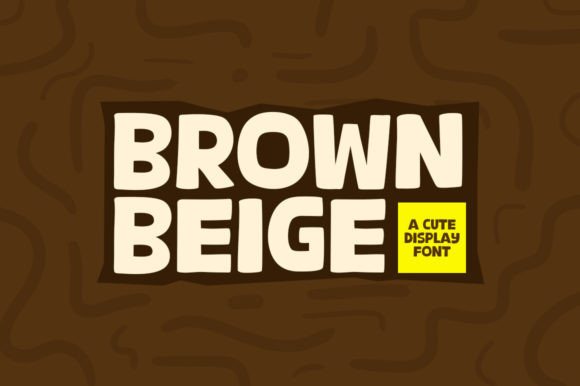
Brown Beige is categorized primarily as a display font. This classification indicates that it is designed for use at larger sizes, such as headlines or titles, rather than for long blocks of body text. The term "modern and cute" suggests a design philosophy that leans towards approachability, warmth, and contemporary trends. Unlike stark, geometric sans-serifs or traditional serifs that convey formality, Brown Beige likely features softer curves, rounded terminals, or unique stylistic quirks that evoke a sense of friendliness.
The name itself implies a neutral yet warm color palette association, although in typography, this translates to a visual tone that is grounded and inviting. When evaluating such a font, it is important to consider how these aesthetic choices influence viewer perception. A "cute" aesthetic can lower psychological barriers, making content feel more accessible and less intimidating. This makes it a compelling choice for brands or projects aiming to establish a connection based on trust and comfort rather than authority or luxury.
Ideal Use Cases and Applications
The versatility of Brown Beige allows it to be matched to an incredibly large set of projects, but it performs best in specific contexts. Understanding these strong fits helps designers maximize the font’s impact.
- Branding and Logos: For startups, boutique shops, or lifestyle brands targeting a younger or family-oriented demographic, Brown Beige can serve as a distinctive logotype. Its unique character helps create brand recognition without appearing overly corporate.
- Editorial Design: In magazines and book covers, particularly those in genres like self-help, romance, or children’s literature, the font can add a layer of emotional resonance. It draws the eye to titles while maintaining a cohesive visual narrative with illustrative elements.
- Marketing Materials: Posters and banners benefit from display fonts that capture attention quickly. Brown Beige’s modern style ensures that promotional materials feel current and relevant, helping designs stand out in busy visual environments.
When used in these scenarios, the font acts not just as text, but as a graphical element that contributes to the overall mood of the composition. Its ability to create lovely designs stems from its balance between structure and playfulness, allowing it to complement both minimalist and intricate layouts.
Evaluating Tradeoffs and Limitations
While Brown Beige offers distinct advantages, no typeface is universally applicable. A critical part of the selection process involves recognizing where this font may fall short. As a display typeface, it is generally not suitable for body copy. Extended reading of large text blocks in a decorative font can cause eye strain and reduce comprehension. For paragraphs, captions, or detailed informational text, pairing Brown Beige with a clean, highly legible sans-serif or serif font is recommended.
Another consideration is the context of the industry. While the "cute" and modern aesthetic works well for creative, educational, or lifestyle sectors, it may clash with industries that require a tone of strict professionalism, such as law, finance, or heavy industrial manufacturing. In these fields, the perceived informality of Brown Beige could undermine the intended message of stability and seriousness. Designers must evaluate whether the emotional tone of the font aligns with the brand’s core values.
Integration and Pairing Strategies
To create cohesive designs, Brown Beige should be treated as part of a broader typographic system. Because it has strong personality, it pairs best with neutral supporting fonts. A simple, geometric sans-serif can provide a stable foundation for body text, allowing Brown Beige to shine in headlines without creating visual competition. Alternatively, a classic serif can introduce a touch of elegance that contrasts nicely with the modern cuteness of the display font.
Color also plays a significant role in how Brown Beige is perceived. Given its name, it may naturally harmonize with earth tones, pastels, or warm neutrals. However, experimenting with high-contrast combinations can also yield striking results, provided the legibility remains intact. Designers should test various color palettes to ensure the font’s details are visible and that the overall composition feels balanced.
Decision-Making Insights for Designers
When deciding whether to incorporate Brown Beige into a project, consider the following practical steps:
- Define the Audience: Is the target demographic receptive to a friendly, approachable tone? If the audience expects formal communication, this font may not be the best fit.
- Assess the Medium: Will the text be viewed from a distance or on small screens? Display fonts like Brown Beige work best when they have enough space to breathe. Ensure that the scaling does not compromise the integrity of the letterforms.
- Check Licensing and Compatibility: Before finalizing any design, verify the licensing terms for commercial use. Additionally, test the font across different devices and operating systems to ensure consistent rendering.
- Compare Alternatives: Look at other modern display fonts in the same category. Compare weight options, kerning pairs, and special characters. Brown Beige should be chosen because it offers something unique compared to other options, not just because it is trendy.
Ultimately, the goal is to enhance the communication of the message. If Brown Beige helps the design stand out while remaining true to the project’s intent, it is a valuable tool. However, if the novelty of the font distracts from the content, it may be wise to explore more subdued alternatives.
Conclusion
Brown Beige represents a thoughtful option for designers seeking a modern, cute display font that adds character to visual projects. Its suitability for posters, logos, magazines, and book covers makes it a versatile asset for creative workflows. By understanding its strengths in creating engaging, friendly aesthetics and acknowledging its limitations regarding readability and formal contexts, designers can use it effectively. Adding this font to your creative ideas can indeed help projects stand out, provided it is applied with strategic intent and paired with complementary design elements. Careful evaluation ensures that the final result is not only visually appealing but also functionally sound.