Retro Prince Font: Evaluating Its Fit for Modern Design Projects
In the crowded landscape of digital typography, finding a typeface that balances nostalgia with contemporary usability can be challenging. Retro Prince emerges as a distinct option in this space, offering a charming display font that transports viewers back to the vibrant aesthetics of the retro era. For designers, marketers, and content creators aged 20 to 50 who are evaluating resources for their next project, understanding the specific characteristics of this font is essential. It is not merely about choosing a "vintage" look; it is about selecting a tool that communicates the right tone while maintaining legibility and visual interest.
This article explores what makes Retro Prince unique, how it compares to other stylistic alternatives, and when it serves as the optimal choice versus when a different approach might yield better results. By examining its design mechanics and practical applications, you can make a more informed decision about integrating this typeface into your creative workflow.
Deconstructing the Design of Retro Prince
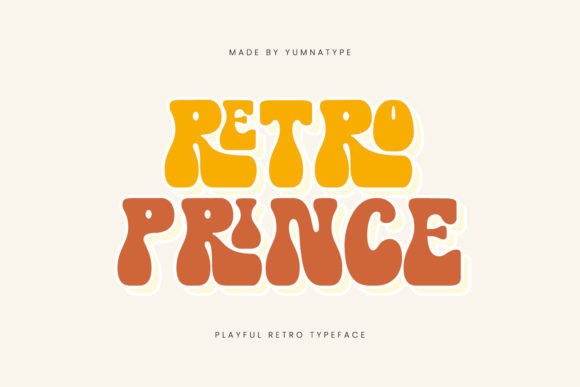
To evaluate any typographic resource, one must first understand its structural DNA. Retro Prince is defined by its meticulous attention to rounded shapes and uneven proportions. Unlike geometric sans-serifs that strive for mathematical perfection, this font embraces irregularity. Each letter is crafted with non-straight outlines, adding a dynamic quality that prevents the text from feeling static or rigid.
The playful style of the font evokes the carefree spirit of the mid-to-late 20th century, specifically drawing inspiration from the graphic design trends of the 1970s and early 1980s. However, it avoids the heavy distortion often associated with psychedelic typography. Instead, it offers a refined quirkiness. The uneven proportions create a sense of movement, making the text feel hand-drawn yet professionally polished. This balance is crucial for modern audiences who appreciate authenticity but reject sloppy execution.
What sets Retro Prince apart is its ability to add spontaneity without sacrificing coherence. The rounded terminals soften the visual impact, making it approachable and friendly. This characteristic is particularly valuable for brands aiming to appear accessible rather than corporate or distant. When you use Retro Prince, you are not just displaying text; you are injecting personality and a sense of fun into your communication.
Comparing Retro Prince to Other Display Styles
When researching typography options, it is helpful to categorize fonts by their primary function and aesthetic lineage. Retro Prince falls squarely into the "display" category, meaning it is designed for headlines, logos, and short bursts of text rather than long-form body copy. Understanding how it stacks up against similar styles helps clarify its best-use scenarios.
Versus Strict Geometric Retro Fonts
Many retro-inspired fonts rely on strict geometric forms—perfect circles and straight lines—to evoke a mid-century modern feel. While these fonts offer high legibility and a clean look, they can sometimes feel cold or overly structured. In contrast, Retro Prince introduces organic imperfections. If your project requires a human touch or a sense of whimsy, the rigid geometry of standard retro fonts may feel too sterile. Retro Prince provides warmth through its uneven strokes, making it a superior choice for lifestyle brands, children’s products, or creative portfolios.
Versus Handwritten Script Alternatives
Another common alternative for adding personality is handwritten script fonts. These can convey elegance or casualness but often suffer from legibility issues, especially at smaller sizes or on digital screens. Retro Prince offers a middle ground. It retains the informal, hand-crafted vibe of a script but maintains the structural clarity of a sans-serif. This makes it more versatile for digital interfaces where quick recognition is key. You get the charm of handwriting without the frustration of deciphering complex ligatures.
Versus Bold Slab Serifs
Bold slab serifs are often used to convey strength and stability with a vintage twist. They are excellent for industrial or rugged themes. However, they lack the lightness and playfulness of Retro Prince. If your brand identity is built on joy, creativity, or nostalgia for a softer era, a slab serif might feel too aggressive. Retro Prince’s rounded edges and bouncy baseline create a lighter visual weight, suitable for contexts that require invitation rather than assertion.
Practical Applications and Best-Fit Scenarios
Identifying the right context for Retro Prince is critical to maximizing its impact. Because it is a display font, its effectiveness diminishes if used improperly. Here are several scenarios where this typeface shines:
- Brand Identity and Logos: For startups in the food and beverage industry, boutique retail, or creative agencies, Retro Prince can serve as the cornerstone of a logo. Its unique character helps establish immediate brand recognition.
- Packaging Design: Product packaging benefits from fonts that stand out on shelves. The quirky outlines of Retro Prince catch the eye and suggest a product that is fun, artisanal, or premium in a playful way.
- Social Media Graphics: In the fast-paced environment of Instagram or TikTok, visuals must communicate quickly. Retro Prince works well for quote cards, event announcements, or promotional banners where brevity and style are paramount.
- Editorial Headlines: For magazines or blogs focusing on culture, travel, or lifestyle, using Retro Prince for section headers can break up the monotony of standard body fonts and add visual rhythm to the layout.
However, there are clear limitations. You should avoid using Retro Prince for legal documents, technical manuals, or any content requiring dense information delivery. Its unconventional design demands more cognitive effort to read than neutral sans-serifs like Helvetica or Arial. Using it for paragraphs longer than two or three sentences will likely fatigue the reader.
Evaluating Tradeoffs and Limitations
No design resource is perfect for every situation. When considering Retro Prince, it is important to acknowledge its tradeoffs. The very features that make it charming—uneven proportions and non-straight outlines—can pose challenges in certain technical environments.
Legibility at Small Sizes: Due to its decorative nature, Retro Prince may lose clarity when scaled down significantly. If your design requires small print, such as footnotes or disclaimers, you will need to pair it with a highly legible secondary font. Relying on Retro Prince for fine print is a risk that can compromise user experience.
Pairing Complexity: Because Retro Prince has such a strong personality, it can dominate a composition. Finding a complementary body font requires careful consideration. A neutral sans-serif is usually the safest bet, but even then, the contrast in weight and mood must be balanced. Poor pairing can result in a disjointed visual hierarchy.
Cultural Specificity: The "retro" aesthetic is subjective. While it evokes a specific era for some demographics, it may not resonate with others or could be perceived as cliché if overused. It is vital to ensure that the nostalgic reference aligns with your target audience’s cultural memory and preferences.
Making the Final Decision
Choosing a font is ultimately about alignment with your project’s goals. Retro Prince is an excellent resource if you aim to evoke warmth, nostalgia, and playfulness. It is particularly effective for projects targeting adults who appreciate vintage aesthetics but demand modern polish. Its distinctive rounded shapes and dynamic proportions offer a fresh alternative to the sterile uniformity of many default system fonts.
Before committing, ask yourself: Does my project benefit from a sense of whimsy? Is the text primarily for headlines or short statements? Do I have a complementary font for body copy? If the answer to these questions is yes, Retro Prince is likely a strong candidate. If your priority is maximum neutrality, high-density information delivery, or a futuristic aesthetic, you may need to explore other categories of typefaces.
By understanding the specific strengths and limitations of Retro Prince, you can leverage its charm effectively. It is not just a font; it is a design tool that, when used with intention, can elevate your visual communication and connect with your audience on an emotional level. Always test the font in your actual design context before finalizing your choice, ensuring it performs well across both print and digital mediums.