Teenage Popular: Balancing Retro Charm with Modern Design Utility
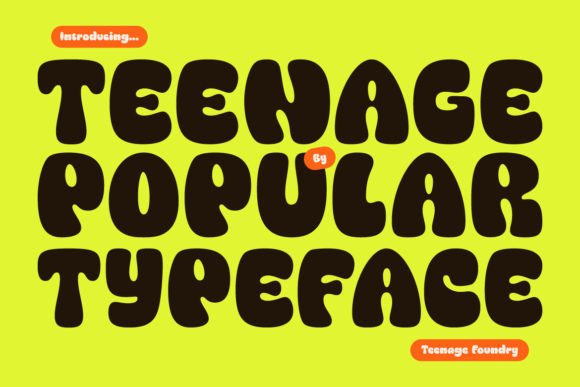
In the expansive world of typography, finding a typeface that successfully bridges the gap between nostalgic aesthetics and contemporary readability can be challenging. Teenage Popular emerges as a distinctive option for designers seeking this specific equilibrium. Characterized by its slightly thick, “fat” appearance, this font exudes a combination of modern and retro aesthetics that resonates with current design trends while paying homage to popular styles from past decades. For creative professionals, marketers, and hobbyists alike, understanding the nuances of Teenage Popular is essential for determining whether it aligns with their specific project goals.
Understanding the Aesthetic Profile
At its core, Teenage Popular is defined by its bold, rounded forms and substantial weight. Unlike thin, minimalist sans-serifs that dominate corporate branding, this typeface leans into a sense of approachability and warmth. The “fat” characteristics of the letters are not merely stylistic choices; they serve to create a visual impact that is both playful and authoritative. This duality allows the font to function effectively in environments where attention-grabbing headlines are necessary without sacrificing legibility.
The retro influence in Teenage Popular is subtle yet unmistakable. It draws inspiration from the graphic design movements of the late 20th century, particularly the bold signage and poster art of the 1970s and 1980s. However, it avoids becoming a caricature of those eras. Instead, it applies a modern twist to these historical references, resulting in a clean, polished look that feels fresh rather than dated. This balance makes it a versatile choice for projects aiming to convey a retro yet fresh feel.
Why Designers Choose Teenage Popular
The primary reason individuals gravitate toward Teenage Popular is its ability to evoke emotion through form. In an era where digital interfaces often feel sterile, this typeface introduces a human element. Its rounded edges and consistent stroke width suggest friendliness and accessibility. For brands looking to soften their image or connect with a younger demographic, Teenage Popular offers a visual language that feels inclusive and energetic.
Furthermore, the font’s versatility is a significant draw. While it is inherently bold, it does not overwhelm when used correctly. It performs well in display settings, such as headers, logos, and short-form copy, where its unique character can shine. Designers appreciate that it requires minimal modification to achieve a professional look, saving time during the initial conceptual phases of a project.
Benefits and Practical Applications
When evaluating whether to incorporate Teenage Popular into a design system, it is helpful to consider its specific strengths. The following areas represent situations where this typeface is likely to be a strong fit:
- Brand Identity for Lifestyle Products: Companies selling apparel, food, or entertainment services often benefit from the casual, confident vibe of Teenage Popular. It suggests quality without pretension.
- Social Media Graphics: The bold nature of the font ensures high visibility on small screens. Its retro-modern appeal aligns well with current social media trends that favor nostalgic visuals.
- Event Posters and Flyers: For music festivals, local markets, or community events, the font’s energetic presence helps capture attention quickly in crowded visual environments.
- Packaging Design: On product packaging, Teenage Popular can differentiate a item on the shelf by offering a distinct personality that stands out against more conventional typography.
In these contexts, the font’s ability to convey a retro yet fresh feel becomes a strategic asset. It signals to the audience that the brand is aware of design history but is firmly rooted in the present.
Tradeoffs and Considerations
Despite its many advantages, Teenage Popular is not a universal solution. Every typeface comes with tradeoffs, and understanding these limitations is crucial for effective design. The most significant consideration is readability in long-form text. Due to its thick strokes and rounded geometry, Teenage Popular can become visually exhausting if used for body copy or extensive paragraphs. The lack of significant contrast between thick and thin lines reduces the eye’s ability to track text efficiently over long distances.
Additionally, the font’s strong personality can clash with certain brand voices. If a project requires a tone of serious authority, clinical precision, or ultra-luxury minimalism, Teenage Popular may appear too casual or playful. Its “fat” appearance, while charming, may not convey the sleekness required for high-end tech products or financial institutions.
Another practical consideration is pairing. Because Teenage Popular is so distinctive, it requires careful selection of complementary fonts. Pairing it with another bold or decorative typeface can result in visual clutter. Instead, it works best when balanced with neutral, clean sans-serifs or simple serifs that allow the headline to remain the focal point.
When to Consider Alternatives
There are specific scenarios where exploring alternative typefaces may yield better results. If your project involves dense informational content, such as academic papers, legal documents, or detailed user manuals, a more traditional serif or a highly legible sans-serif like Helvetica or Georgia would be more appropriate. These fonts prioritize clarity and neutrality over stylistic flair.
Similarly, if the design goal is to evoke a specific historical period with absolute accuracy, a dedicated vintage typeface might be more suitable. While Teenage Popular offers a modern twist on retro aesthetics, it is an interpretation rather than a replication. For projects requiring strict historical fidelity, designers should look for typefaces that closely mimic the printing techniques and imperfections of the target era.
For users seeking extreme versatility across a wide range of weights and styles, a comprehensive font family with multiple variations (light, regular, bold, italic, etc.) might be preferable. Teenage Popular is specialized; its strength lies in its specific aesthetic niche rather than broad functional adaptability.
Making the Decision
Choosing Teenage Popular ultimately depends on the emotional response you wish to elicit from your audience. Ask yourself whether your project benefits from a sense of nostalgia mixed with modern energy. If the answer is yes, and if the application is primarily for headlines, logos, or short bursts of text, this typeface is likely an excellent choice.
Evaluate your existing design elements. Does the color palette support a bold, retro-inspired font? Are the accompanying images and graphics compatible with a playful yet polished aesthetic? If the surrounding design elements are muted or minimalist, Teenage Popular can serve as a striking accent. However, if the overall design is already busy, adding such a dominant typeface may create visual noise.
It is also advisable to test the font in its intended medium. Print rendering can differ significantly from screen display, particularly with bold fonts. Ensure that the thickness of the letters does not cause ink spread in print or pixelation on low-resolution screens. Adjusting tracking and leading can help mitigate some of these issues, enhancing the overall clarity and impact of the text.
In conclusion, Teenage Popular is a compelling tool for designers who value character and context. It offers a unique blend of retro charm and modern functionality that can elevate brands and projects seeking to stand out. By understanding its strengths, acknowledging its limitations, and applying it thoughtfully, creators can leverage this typeface to communicate their message with clarity and style. Whether used for a new brand launch, a social media campaign, or a creative personal project, Teenage Popular provides a distinct voice that resonates with contemporary audiences while honoring design heritage.